
It's Better Than Going Blind
Or how "Under Pressure" became my favorite song

I’ve been ill for a couple of months, which is why I haven’t been publishing. It’s a rare disorder, never fatal as far as I know, but it can lead to blindness. We probably caught it in time, although it will have to be closely monitored.
What led me to getting a diagnosis was something actually rather pretty. When I would move my head quickly, I would see a veil of black and white stars over my field of vision. Something like fizzy fireworks. These episodes lasted only for a few seconds at a time several times a day and didn’t interfere with my normal functioning, but they shouldn’t have been there.
At first, I tried to diagnose myself. I remembered one time in high school when I blacked out in gym class. It was visually a little like that, although I didn’t feel as if I was going to black out. I thought maybe my blood pressure was too low. I am taking a medication for hypertension, plus I had recently started on Ozempic, which I read can lower blood pressure. Maybe we were overcorrecting. I took readings with my wife’s cuff, and they did sometimes seem to be low.
Eventually I called my primary care provider’s office and spoke to a nurse practitioner. Without asking me to come in, she said that she didn’t think it was low blood pressure but benign paroxysmal positional vertigo, which results from a calcification of solids in the semi-circular canals. It’s generally quite treatable, and she gave me some exercises to do to clear it up.
I didn’t like this. The NP sounded impatient with me, and only asked me a couple of questions. I did some research on my own and did the exercises a couple of times on my own, but I had no faith in her diagnosis, largely because if I were suffering from vertigo, I should have felt dizzy, and I never did.
After a couple of weeks (now it’s July), I had a stroke of genius and said to myself, “If I am seeing funny things, maybe I should go to my eye doctor.” So I made an appointment and went in. That was the day that changed my life.
The tech did a couple of tests on me and then put in the dilating drops. After a while, I was extremely dilated, probably more than normal. Dr. B, a nice ophthalmologist in his 30s came in and shined really bright lights in my eyes. Then he went in the other room and typed up a report which he brought back to me.
“You have to go to the ER right now,” he said. He showed me pictures of my retinas from that day ones from two years earlier. The current pictures showed an enflamed red area in the center of each retina. It’s called a papilledema and it’s a swelling of the optic nerve as it enters the back of the eye.
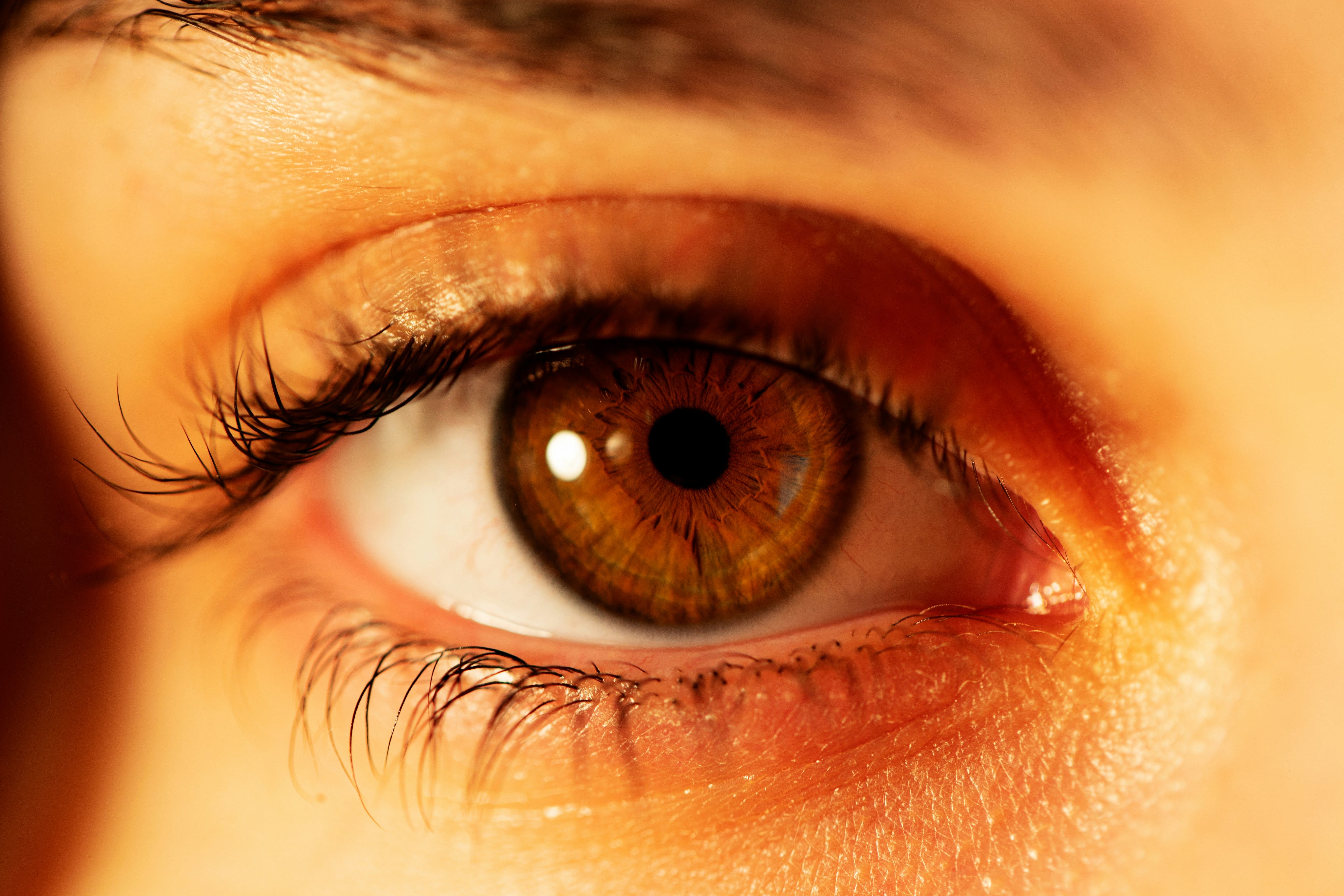
It’s caused by increased intracranial pressure. Why it’s so urgent is that the pressure can be caused by a brain tumor or an aneurysm. Those have to be identified and dealt with ASAP. Sometimes it’s not caused by those things, in which case you are at little risk of dying, but any damage to your optic nerve is permanent and you can lose some or all of your vision.
So, I went in the bathroom and phoned my wife. I’d need her to drive me to the hospital and maybe stay for a while in case I was admitted.
The hospital took hours. They did a neurological exam, which I passed with flying colors, and they decided to do a CT scan with and without contrast dye. They neglected to put in the dye the first time, and I had to chase someone down to do it a second time. The tech inserting the needle created an enormous bruise on my arm and spurted blood on my skin and trousers.
The scan came back clean. They gave me a referral to a local neurologist. I asked whether I needed to see one, since the results of the scan were good, and surprised, they said yes.
I still saw stars.
I went back to my ophthalmologist a week later, as he asked me to. He was relieved about the results of the scan but still cautioned me about the danger my vision was in. He didn’t get too deep into the nature of the disorder, but he did explain that weight loss is often the best treatment of it.
The next day I went to the neurologist. Dr. A was in his 50s or early 60s and had a tiny practice. His English was accented, but I got the drift. He said I probably had a condition called Idiopathic Intracranial Hypertension—in other words, increased pressure inside the skull of unknown causes. I said, OK, so let’s start me on weight loss. He was aghast. We don’t have time for that. We need to diagnose this and treat it immediately. Apparently, there are medications.
But first, he wanted me to see a colleague and get a spinal tap to measure the pressure of my cerebrospinal fluid and maybe withdraw some excess. He made a phone call, and we set up the tap for the next day.
Then he explained that the ultimate treatment for IIH might be surgery behind the eyes so the excess CSF can seep out like tears. It was grotesque. The surgeon would have to cut through the eyelids to get to the optic nerve sheath. Dr. A. insisted on showing me pictures. Was this my future?
The lumbar puncture was done by an anesthesiologist. It took him two tries before he got a gusher. Of course, he numbed the area with a local, so it didn’t hurt much, but I was uncomfortable lying on the table for so long and I got these strange electric referred pains in my leg. My opening pressure, as they call it, was 35, which is high, but not so high as many people with IIH have. He took out 50 mL of CSF. He showed it to me in five vials. It was as clear as water.
The anesthesiologist phoned the neurologist while I was still on the table. He prescribed the first-line defense against IIH, a powerful diuretic called Diamox.
Diomax has a lot of side-effects. It is usually prescribed for IIH patients with headaches. As you might imagine, having excess pressure in your skull could lead to bad headaches. From what I’ve read, they are often even worse than migraines and are accompanied by nausea and vomiting.
This has not been the case with me, thank goodness. About every couple of days I’ll get a quick flash of pain across the top of my head. It lasts two seconds and goes away. In fact, I no longer get the migraines I got when I was younger. Other than the veil of stars, I only have one symptom of IIH that I can perceive from the inside. It’s called a pulsatile tinnitus, which means I hear my heart beating. I hear it most of the time in my left ear and sometimes in my right, too. This has actually been an annoyance for the last couple of years, so perhaps it’s not related to the IIH, but it is a classic symptom.
So, I’m not being treated for headaches. We’re just trying to keep me from losing my vision.
Withdrawing the CSF and then starting on Diamox put an end to the stars, but not the tinnitus. (The stars did come back four or five times a couple of weeks later and then disappeared for good.) The ophthalmologist said my eyes didn’t look any better, but they didn’t look any worse, and that was good enough for now. Evidently, papilledema heals slowly.
But the side effects of the Diamox kicked in almost immediately. I became very tired and weak. I had no stamina. Bending over or even rolling over in bed caused the muscles in my torso to hurt. I already drank a lot of liquids because I have kidney disease (and yes, there’s a risk to taking a diuretic like Diamox if you have kidney disease). Now, the diuretic dried out my throat and frequently made my voice hoarse. I sounded something like Don Corleone. I could not live like this.
It turns out that I am a rather unusual case of an already rare disease. The typical IIH sufferer is an overweight woman of childbearing years. I am an overweight man in my 60s. And I don’t get the headaches.
The neurologist said to find a neuro-ophthalmologist at a university hospital. I did some research. One didn’t have an opening until next August (a year away). Another, not until next February. Finally, I contacted the Wilmer Eye Clinic at Johns Hopkins University Hospital. They had an opening with an ophthalmologist on October 1. She wasn’t a neuro-ophthalmologist, but she’d be on a team with at least one, and I would be getting my foot in the door. I took the appointment.
Life turned into a waiting game. I kept working, but I didn’t take on any new students. I couldn’t do much. I couldn’t write or read anything very serious. I needed my wife to help me shower and dress. I couldn’t do my share of the cooking or take out the trash. In fact, I couldn’t walk around outside at all without a cane. I listened to a lot of music and read articles about politics. I watched videos with baby elephants and alligators (not in the same clips).
Life was quite uncomfortable. I decided to frame it as convalescence.
Finally, October 1 rolled around, and my wife drove me to Baltimore where I saw Dr. K, a resident. She answered my questions and ducked out of the room to ask a neuro-ophthalmologist something. I didn’t feel neglected.
She prescribed a different drug, not quite as commonly used for IIH, but still appropriate. It’s called Topamax. She was going to titrate the dose: 25 mg / day for the first week and then add 25 mg / day / week until I reach 100 mg / day.
It has different side effects. One is that it often causes people to lose weight. She said I could also go back to taking Ozempic, which I had discontinued because I had read it sometimes hurts people’s eyes. She said it typically made people more alert, not more sleepy.
It was very hard for me walk the long corridors through the hospital to get back to the car, but I was happy that I would be rid of the dread Diamox. I took my last one that night and started on the Topamax the next day.
Almost immediately, I felt better. I could walk without shuffling. My torso didn’t hurt. My voice was normal. I still had little stamina because I hadn’t exercised for months, but I could walk outside without a cane. I’ll start walking for exercise soon. Eventually, I’ll see my physical therapist about an exercise program. All assuming the Topamax works.
I went up to 50 mg / day last night. I feel pretty good, but there might be a problem. The night before last I got a nosebleed when I blew my nose. In the next 36 hours, my nose started bleeding spontaneously three times—no blowing, rubbing, picking, anything. And they were not just little trickles. Now, I’ve had many bloody noses in the past, especially when the air is dry, as it is now, but I did some research, and it turns out the Topamax can mess with your platelets and give you bloody noses. And this is on the lowest dose.
One more thing to be concerned about. But it’s not the biggest thing. The biggest thing is that a low dose of Topamax may not keep the IIH in check, which could in turn lead to optic nerve damage. Since you have to build up the dose slowly, there is a period where I’m not completely covered. I’m going to my local ophthalmologist every two weeks, and then in November I’m going back up to Hopkins. In February, I will see a Hopkins neuro-ophthalmologist, who fortunately, has an office closer to us than Baltimore.
So that’s where I stand for now. We’re going to keep a close watch, and I’m going to try to lose some weight. This is an all-around unpleasant experience, but I keep reminding myself of a few things: 1. We caught it early and I have no vision loss. 2. I don’t get headaches. And 3. My health insurance covers all of this.
When things get especially unpleasant due to the medications, I just say to myself “It’s better than going blind.”
I’ll write a follow-up article when I have some major news to report.
Take care of yourself, Kurt! This is yourself Under Pressure. Pressure can make things stronger.
Sorry for your woes, Kurt. Get better soon. I admire your persistence. Hang in there.