
Book Update
It's mostly finished

My book The Quest for Wholeness is mostly finished. I think I can write the remaining essays this year. Then I’ll spruce them up and integrate them to get them into a form I can submit as a manuscript. The essays are in their current form on my Substack. If anyone is interested in being a beta reader, please let me know, or if you can connect me with an agent or publisher, I would be eternally grateful!
I call the book The Quest for Wholeness because its central idea is personal holism, which is an anti-dualist theory that states that human beings are not split into a soul, mind, or brain and a body, but are indivisible wholes, conscious and bodily, living and moving in the directly known world. Accompanying this primary form of integration are, or can be, derivative forms of integrated experience, knowledge, feelings, and values. I have a vision of a powerful synergy of human potential.
That’s the wholeness aspect. The quest aspect comes from the fact that most people will have to work to attain it. Dualism is a very common, perhaps natural, position, even among people who haven’t studied philosophy. We need to understand holism and its ramifications and let them sink in so that we can get the benefits. I fish at the confluence of philosophy, psychology, and self-help and will provide tips and exercises to assist the reader in attaining greater wholeness along with the theoretical support for my ideas.
I am not an academic, but I have been reading and writing in my fields of interest for nearly 50 years. I have self-published a monograph and a book on Amazon, and I have blogged extensively.
My major influence is Ayn Rand, but I am not in 100% agreement with her. My disagreements with her are serious enough that she would probably not consider me an Objectivist, although perhaps we could talk them through. Since she’s dead, it really doesn’t matter. I’m not committed to what I regard as her errors or deficiencies; neither am I trying to ride on her coattails. I use her ideas where they are useful to me. In any case, I believe the disrespect she gets in some quarters is seriously misguided and frequently petty.
I am also influenced by the French phenomenologist Maurice Merleau-Ponty, although perhaps more by philosophers who were influenced by him than by him directly, since they typically write more clearly than he did. The late John Searle, if used carefully, can also be helpful.
A recent discovery has been the German psychiatrist-philosopher Thomas Fuchs. I would describe Fuchs as a humanist whose mission is to rescue the human being from those thinkers who would reduce him/her to a brain or a computer program. He has been very useful to my work.
Stylistically, I aim for clarity. My greatest influences in this area are not philosophers but essayists like George Orwell and Paul Fussell. I always try to infuse what I write with wonder.
Sixteen of the essays are written. A few others only exist as notes. Here is an overview with links:
The foundational essay is “One Person, Indivisible.” It concerns the theory I call personal holism, according to which a human being is in no sense a dualistic mind, soul, or brain + a body, but rather is a unitary, conscious, corporeal person. What follows from this is the power of self-integration and connection to one’s physicality, emotions, intuitions, and sexuality, as well as a direct encounter with the objective world and the other people in it. This essay was published in June 2025, and you can read it here. I am very proud of this essay. It is my most popular work, and I think it contains some of my best writing.
In the essay I offer my definition of a person, and I unpack it. I defend personal holism by arguing that the dualist concept of a separate consciousness is a faulty reification of the attribute of being conscious. And I examine some of the ramifications of dualism versus holism for sexuality as a way of holding a lens up to the theory.

It’s very easy to live as if dualism were true, and we need attitudes and practices that will help us live the truth of holism. Some of these are contained in the experience of what I call “presence.” Presence is the experience of one’s existence that comes from focusing on being a physical entity with volume and mass existing in a world of other such things. The molecules of one’s partial awareness coalesce into a whole, self-aware, and centered person. The presence of one’s self is met and reaffirmed by the presence of the world, which resists change by mere wish. Presence can be focused or diffuse, determined or serene, but it always involves sensitivity to the world, one’s self, and one’s faculties (which brings us back to holism.)
My essay, “Presence,” can be found here. In the essay, I discuss two techniques I adapted from other thinkers that are good for achieving presence. I highly recommend the practice of presence as a variation on mindfulness. My mantra is “I am present among the things of the world, and they are present to me.” Presence can provide a lot of assistance in the quest for wholeness.

My view of ethics builds on Ayn Rand’s, but with some adumbrations. I agree with her theory that human life is the proper standard of value and that happiness is our proper purpose in living, but I think we need to fill in more of human nature. Rand would have her value system be activated by a fundamental choice to live, the terminus of all of our hypothetical imperatives. But that choice cannot be grounded in any further values. That leaves some people feeling as if they are making an existential leap in the dark, and it makes it difficult to argue with people who choose other ultimate values.
My way out of this conundrum is to point out that we normally develop from infancy and childhood natural values that we experience as inborn desires. We all desire to love and be loved. We desire stimulation and activity. We desire mastery of skills. And so forth. All of these values aim more or less at life. We naturally value life; we just have to not get off-track. Philosophy can help our desires find their proper ends, avoid contradictions, and perfect themselves. Then we don’t need to choose life so much as affirm it. Our intellectual understanding and our natural desires can synergize and lead us to greater wholeness and happiness. This is personal holism again. (N.b. we might need therapy as well. Life is complicated.)
I wonder whether Rand could be persuaded of this extension of her ethics. Some of her character studies in her novels and even her non-fiction sound somewhat like what I am proposing. I suppose we’ll never know, and it really isn’t that important. There’s more to my analysis than this. It’s called “The Perfection of Desire.”

“One Person, Indivisible” is a hub that has several spokes. One very important spoke has to do with what I call robust reason. Reason, as it is typically thought of, comprises the senses, concepts, and verbal and mathematical logic, all manipulated dispassionately. That’s all Rand means by the term. I go farther. What I am calling robust reason integrates "traditional" reason with and nurtures the use of our other faculties, such as intuition, the felt sense, the subconscious generally, empathy, and emotions, engaging in a “dialogue for one” between our various thoughts, feelings, and impressions on a topic. Using everything you’ve got can unleash enormous cognitive power as well as creating a tremendous feeling of wholeness that complements personal holism. The exercise of robust reason is a key part of human self-realization. There is a version of this essay on my Substack here. It’s called “Self-Realization and Ecology: How to Become Who You Are,” and it concerns reaching your potential naturally rather than through a “force fit.”
Related to the concept of robust reason as a means of cognition are common sense and wisdom, which will be the subjects of at least one essay. Common sense and wisdom involve practical, middle-level abstractions and ideas time-tested and preserved. They are an adjunct to philosophical reasoning, which can be too complex and time consuming to use in dealing with some everyday situations. I will examine the psychological and epistemological aspects of these forms of knowing with a particular eye toward oral versus literate thinking. Here is my essay about common sense. It’s more provisional than some of the others. I try to come up with a definition of common sense that can survive objections I ran into on a Reddit thread, and I examine someone I once knew who lacks common sense as an example. I’m not sure I will ever write a specific essay on wisdom. I might just beef up my discussion of robust reason, which in its fullest form, incorporates wisdom.

One thing I want to avoid in the book is the claim that everyone has an explicit philosophy. This is just not true. But people do hold a mishmash of half-conscious, half-digested ideas, some of which exist preconceptually as intuitions or sense of life feelings. It does all tend to hang together. I call this mishmash the “Proto-Philosophy” because formal philosophy grows out of it. It’s important to understand the proto-philosophy because otherwise discussions of philosophy might not seem relevant to many people, when actually the proto-philosophy is a latent philosophy and can be improved by understanding explicit philosophy. The ideal, when possible, is for more of one’s philosophy to become explicit. This essay closes with a questionnaire that could help the reader identify the elements of his or her proto-philosophy.

This essay offers advice on how to raise a child to be a holist. It was fairly popular, but I feel unconfident about it. I am not a parent and haven’t spent much time around children. And I am not happy with the research I did for it. The counsel I offer seems good, but I could be wrong. I will definitely revisit this piece before I submit the manuscript to a publisher. Any advice would be appreciated.
My main philosophical opponent in The Quest for Wholeness is dualism. Although many philosophers are materialists on the surface, if you scratch them, they are still dualists, and the same goes for Christians who would claim to be some variety of holists. So, one section of the book will consider Varieties of Dualism. I am not treating this as an academic study; I believe that embracing different theories on this subject affects how people live, usually for the worse, and I want to show a way out.
So, I am writing a series of essays, each about a type of dualism. Here is the introductory essay, which is not in its final form, since I’m not sure which forms of dualism I’m ultimately going to write about.
One key feature of the analyses is the idea of identification: What part of the self does the dualist identify his essential self with? For example, the Cartesian thinks he is his mind but cannot be, because the mind isn’t a separate thing. I would say that most Cartesians implicitly identify with their faculty of reason.
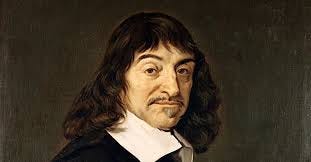
In this essay, which was quite popular, I examine Cartesian dualism. Since I consider the philosophy of holism versus Cartesian dualism in several other essays, I mostly focus on the psychology of mind-body dualism in this one. Why do people believe in dualism? I offer several theories. How can people believe in dualism who have never studied philosophy? What are the negative consequences of embracing a dualistic worldview? I talk about my own childhood and youth as a case study, since I believe philosophy should ultimately be personal. This was a popular essay.

There are many types of beliefs in a soul. Here I focus on the Christian view. Actually, there are a number of Christian views. Some of them even sound like holism, but if you examine them closely and go back to biblical sources and Christian interpreters, for practical purposes, they basically amount to a kind of dualism, with a soul that wants to be pure tied to a body that is an inherent source of temptation or even sin. To demonstrate the negative consequences of soul-body dualism, I discuss the “purity culture” that started in the 1990s and that caused many young women to become emotionally dissociative or even sexually dysfunctional.
So far, this is not an original treatment of Christian dualism. Where I think I become more original is in my hypothesis that most Christians, although they believe they identify with the non-existent soul, actually identify with their conscience, which they wish to wash free of sin. While I back this claim up with a few points, it would probably take a team of theologians, philosophers, and psychologists to actually validate this idea, which I confess is beyond my abilities to prove, at least in the years I have remaining to me.

This type of dualist can believe himself to be either a soul or a mind as far as his official philosophy goes, but what he actually identifies with is his will, and what he exerts his will over is his body. In this essay I examine several types of dualists who seek to master their bodies, from religious people who mortify the flesh, to cold plungers, to body builders, to ultra runners, to dieters, to workaholics.
The slogan of this type of dualist is “Mind over Matter,” and I examine the history of that idea and how it shows up in dualist-adjacent types of people who try to strengthen their willpower and tolerance for pain. I did a lot of research for this essay to support my positions, and it is my most popular essay after “One Person, Indivisible.”
“The Varieties of Dualism” series will almost certainly contain essays about brain-body dualism, as well as the kind of transhumanist dualism that claims that the mind is an uploadable program. For now, all I have written is this little reductio ad absurdum argument on why the self cannot be merely the brain. This may get folded into something larger or tucked back in with the more technical essays.
Speaking of the more technical essays, I’m putting them toward the back of the book. They are necessary, because I am writing philosophy as well as psychology and self-help, but I don’t want to scare some of my readers off by front-loading the heavy lifting. This essay is about how personal holism and perceptual realism support each other. Perceptual realism is the theory that claims that we perceive things directly, not via representations or mere sensations in our mind. Historically, dualism and representationalism have always supported each other. I’m kicking out the supports and showing how arguments for personal holism bolster perceptual realism and vice versa. These are ideas I’ve been working on since I was in college over 40 years ago.

Also a somewhat technical essay, but maybe a bit more fun than the previous one, this one addresses two related problems in philosophy: 1. How do mental events cause physical events? and 2. What is the nature of human action? My solution to the first problem is to stop reifying consciousness and regarding the physical world as closed and dead. We don’t have to wonder how consciousness causes action, because consciousness isn’t an entity—a conscious person is an entity, and a conscious person is already in the physical world, so there is no interdimensional gap between the mental and the physical that has to be bridged. (That’s the short version.)
My theory of action is that prior, purely mental intentions do not cause actions. They only provide a context or plan. Effective intentions are in the actions, just as conscious-ness pervades our person. Read the essay. You’ll dance better.
This essay is a bit speculative, but I think it deserves a place in the book. It concerns styles of attention from the work of Dr. Les Fehmi—narrow objective, narrow immersed, diffuse objective, diffuse immersed, open focus—and how I hypothesize that they correlate in practice with theories of mind and knowledge—Cartesian dualist, animalistic, spiritualistic, pragmatistic, personal holist. I feel confident about part of the correlation, but I need to go back and do more research about the rest. And I haven’t written the essay to have much self-help value, so this one needs work. Suggestions are welcome.

I’m not sure what other essays will round out the book. I’m playing around with one tentatively called “Imagination and the Self-Concept” about how the idea of an inner self in an inner world (which many people would take to contain a separable mind) comes from our ability to imagine things, including a narrative self. I don’t know how technical this essay ultimately will be, so I’m not sure where in the book it will go. I’ve thought a lot about self-awareness over the years, and this might belong up front with “Presence,” or it might be a more technical matter that belongs in the back of the book.
Speaking of matter, I might write an essay about the relationship between consciousness and matter, unless I decide that I’ve already covered it or will cover it in other essays, such as “Living, Moving, Dancing.” And I’m not sure how many essays I will write about the brain, which is an important topic since so many philosophers, neurologists, and even laypeople mistakenly believe it to be the true self. Brain-body dualism, as far as I am concerned, is just an update of Cartesian philosophy with scientific dressing.
I’m not sure how much I want to write about politics and aesthetics, if at all. I might just want to stick with how-to-live-your-life issues. My view of politics is that there is such a thing as individual rights, but that they are not some kind of quasi-mystical aura surrounding people but rather more like rules in the society game. (I am not saying that Rand is engaging in quasi-mysticism, but some proponents of individual rights seem to). I would also consider the idea of who has a right to govern and set limits on things such as immigration. I don’t think Rand or the libertarians generally have addressed these problems because to them it would sound as if the ruling citizen class would be privileged to use force in an illegitimate way. I do not share this concern, but I grant that I do not have the matter all worked out. I would test version of rights against some hard cases. Or I might skip politics altogether and just write about how presence applies in social situations.
My view of aesthetics is that Ayn Rand’s definition of art, while it points in the right direction, is a bit off the mark, and I might offer my own.
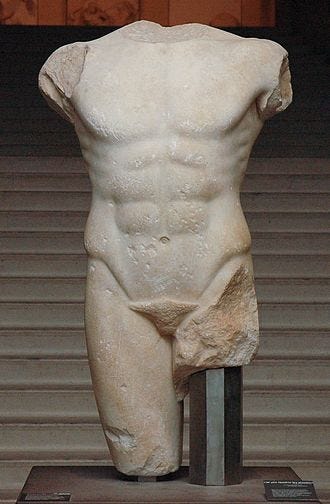
I think the final essay will be a coda about the importance of what I call chosen wonder in human life. There is an essay on this topic here. Chosen wonder is wonder for adults. Children feel wonder naturally, but adults tend to grow out of it. This essay encourages the cultivation of wonder and includes a reading of a poem.
Obviously, I am not going to cover every issue in philosophy in a single book, but I believe that I can paint in broad strokes my views on many major topics as they affect human existence. This will be the culmination of my life’s work, and I firmly believe it can have a positive impact on people’s lives. Working on this makes me happy.
Way to go!
Keep kicking!
Well written as usual. You are a pro at using personal input to make good philosophical-intellectual points and at the same time avoiding “too much information”. Looking forward to your continued development of your ideas, which are interesting even if not always compelling. Its admirable that you continue to detach yourself from Rand, as some of her ideas are unnecessary drags on your better ideas, which feel more original when not anchored in her standard dogma. Your ideas would appear to stand on their own merit, and needn’t be derivative of others.